Electronics shopping can feel like navigating a maze where every turn promises the "best deal ever." The real challenge is not finding a discount. It is figuring out whether that discount actually saves you money once you account for accessories, warranties, and bundled extras. Treating electronics deals as a total value problem rather than a simple price comparison is the approach seasoned bargain hunters use to consistently come out ahead. This article breaks down the most important deal types, explains how to compare them intelligently, and gives you a practical framework to make smarter buying decisions every time.
Table of Contents
- What makes a great electronics deal? The total value framework
- Flash sales, bundles, and clearance: Popular electronics deal types
- How to find the right deal: Using filters, sorting, and navigation smartly
- Deal comparison cheat sheet: When each type offers the best value
- Our take: Why chasing sticker discounts alone can cost you more
- Ready to find your next great electronics deal?
- Frequently asked questions
Key Takeaways
| Point | Details |
|---|---|
| Total value is key | Look beyond headline discounts to extras, accessories, and return policy for best electronics deals. |
| Know deal types | Flash sales, bundles, and clearance deals each offer unique benefits and work best in different shopping situations. |
| Use smart filters | Deal filters and navigation tools help you quickly find top offers that fit your real needs on major e-commerce sites. |
| Bundles can save more | Sometimes bundled deals—with accessories or services—provide much better value even if the discount looks smaller. |
| Don't chase discounts only | The biggest sticker savings don't always mean the best deal if essentials are missing or terms are unfavorable. |
What makes a great electronics deal? The total value framework
Before you click "add to cart" on anything, you need to understand what a great deal actually looks like in electronics. It is almost never just the biggest percentage off. A 40% discount on a pair of wireless headphones sounds incredible until you realize the bundle version at 25% off includes a carrying case, a charging cable, and a one-year extended warranty that would cost you $30 separately.
Total value means you are evaluating the complete package:
- The headline price after the discount
- Included accessories (cables, cases, mounts, adapters)
- Warranty and return window (30 days vs. 90 days matters)
- Subscription or service trials (streaming services, cloud storage, premium apps)
- Shipping costs (free vs. paid can swing a deal by $10 to $20)
- Trade-in credit if you are upgrading from an older device
Electronics deal evaluation should always factor in the complete package and the real utility of every extra included, not just the discount badge on the product page. A laptop bundled with a mouse, a laptop bag, and two years of antivirus software might cost $50 more than a bare-bones flash sale price on the same model. But when you add up what you would spend buying those extras separately, the bundle wins easily.
"The smartest electronics shoppers do not ask 'what is the cheapest option?' They ask 'what gives me the most for my money right now?'" This mindset shift is what separates one-time bargain wins from consistently smart shopping.
Pro Tip: Before you evaluate any electronics deal, open a second browser tab and price out every included extra separately. If the bundle saves you $40 or more in combined extras, it is almost always the better pick, even at a higher sticker price.
Using retail navigation tips to filter deals by bundle type or included accessories can save you a lot of manual comparison time, especially when you are shopping across multiple platforms at once.
Flash sales, bundles, and clearance: Popular electronics deal types
Now that the value framework is established, let's break down the most common deal formats you will find online. Each has a distinct structure, a best use case, and some real pitfalls to watch for.
Flash sales are time-limited events where a retailer drops prices steeply for a short window, sometimes just a few hours. Think Amazon Lightning Deals or Walmart Rollback events. The urgency is real, but so is the pressure to buy before you have fully compared options. Flash sales work best when you already know the product well and have done your research in advance.
Bundle deals combine a main product with accessories or complementary items at a combined price lower than buying each separately. A bundle/value-first approach is especially powerful in electronics because accessories are often overpriced when bought individually. A smartphone bundled with a case, screen protector, and wireless charger is a classic example where the bundle price beats individual purchases by a wide margin.

Clearance deals appear when a retailer needs to move old inventory, usually because a newer model is arriving. These can offer some of the deepest discounts available, sometimes 50% to 70% off. The catch is that clearance items may lack full warranty support, and you might be buying last year's technology.
Here is a quick comparison to help you decide which deal type fits your situation:
| Deal type | Typical savings | Best products | Main risk |
|---|---|---|---|
| Flash sale | 20% to 50% | Headphones, smart home devices | Impulse buying without research |
| Bundle deal | 15% to 40% effective | Smartphones, laptops, gaming gear | Low-value accessories inflating price |
| Clearance | 30% to 70% | TVs, previous-gen laptops | Limited warranty, older tech |
| Open-box | 10% to 30% | Appliances, monitors | Cosmetic damage, no original packaging |
Pro Tip: Clearance is often your best move for model-year closeouts on TVs and laptops, where last year's specs are still excellent. Bundles shine for premium brands like Apple or Sony, where accessories are expensive and the brand ecosystem matters.
Knowing which format to target based on your product category is one of the most underrated skills in deal hunting. Check the best deals page to see current flash sales, bundles, and clearance events across Amazon, eBay, Walmart, and more, all in one place.
How to find the right deal: Using filters, sorting, and navigation smartly
Understanding the types of deals is just half the battle. Knowing how to actually find them efficiently is what separates good deal hunters from great ones. Most retail platforms have powerful filtering and sorting tools, but they are often buried or poorly labeled.
Here is a step-by-step approach to finding deals efficiently on any major platform:
- Go directly to the deals or sale section. Most platforms have a dedicated deals hub. On Amazon it is "Today's Deals." On Walmart it is "Rollbacks & Clearance." Start there instead of browsing by category.
- Apply a category filter first. Narrow down to electronics, then to your specific subcategory like headphones or laptops. This removes noise fast.
- Sort by "best discount" or "price: low to high." Sorting by discount percentage surfaces the deepest cuts immediately. Sorting by price helps when you have a strict budget.
- Add a rating filter. Set a minimum of 4 stars. A 60% off product with a 2-star rating is not a deal. It is a trap.
- Check bundle availability. Many platforms let you filter for bundles or "frequently bought together" packages. Use this to spot value-added options.
- Read the deal expiration. Flash sales end. Clearance stock runs out. Knowing when a deal expires helps you prioritize without panicking.
Retail deal UX and navigation research consistently shows that weak deal discovery interfaces cause shoppers to miss genuinely good offers because they cannot filter effectively. Poor site design is not your fault, but it is your problem to work around.
"Users look for deal and sales filters and price sort functionality as primary tools. When those features are buried or broken, even the best deals stay hidden." This is why cross-platform comparison tools exist: to fix what individual retailer sites get wrong.
Pro Tip: Use multiple filters simultaneously. Combining "under $200" with "4 stars and above" and "bundle available" on a platform like Amazon can surface deals that 90% of shoppers never see because they only use one filter at a time.
Deal filters and sorting tools built into comparison platforms can replicate this multi-filter approach across Amazon, eBay, and Walmart simultaneously, saving you from repeating the process on five separate websites.
Deal comparison cheat sheet: When each type offers the best value
Once you have found and filtered your options, here is a practical reference to help you make the smartest final choice based on your specific shopping situation.
| Deal type | Best situation | Recommended products | Watch out for |
|---|---|---|---|
| Flash sale | You know the product well | Earbuds, smart speakers, accessories | Buying without checking reviews first |
| Bundle deal | Buying into a new ecosystem | Smartphones, laptops, gaming consoles | Bundles padded with low-value extras |
| Clearance | You do not need the latest model | TVs, tablets, previous-gen phones | Missing or shortened warranty coverage |
| Open-box | You want near-new at a lower price | Monitors, appliances, cameras | Cosmetic issues, missing accessories |
Beyond the table, here are the most common deal "watch-outs" that trip up even experienced shoppers:
- Bundles padded with low-quality accessories. A $10 generic case and a no-name charging cable do not justify a higher bundle price. Check the brand and quality of every included item.
- Clearance items without warranty. Some clearance products are sold "as-is." Always confirm the warranty status before buying, especially for high-ticket items like laptops or TVs.
- Flash sales on last year's overstock. Retailers sometimes run flash sales on products that have been sitting in warehouses for 18 months. Check the product release date before assuming you are getting a current-generation item.
- "Free" subscriptions with short trial periods. A three-month streaming trial sounds great until you realize it auto-renews at $15 per month. Factor that into your total value calculation.
- Hidden shipping costs on clearance items. Some clearance deals exclude free shipping. A $30 discount with a $20 shipping charge is only a $10 saving.
Electronics deal evaluation that accounts for the risk and utility of extras, rather than just the discount badge, is what consistently leads to purchases you feel good about a week later.
Matching the right deal type to your actual situation is the skill that separates smart shoppers from people who just got lucky. If you are upgrading your entire home office setup, bundles win. If you are replacing a broken TV and do not care about the latest model, clearance is your best friend. If you already know exactly what you want and have done your homework, a flash sale can be a genuine win.
Our take: Why chasing sticker discounts alone can cost you more
Here is something most deal-hunting articles will not tell you: the biggest discount is often the worst deal in the category.
We have seen it happen repeatedly. A shopper grabs a 50% off laptop because it has the biggest markdown on the page. But the laptop comes with no accessories, a 15-day return window instead of the standard 30, and no bundled software. Meanwhile, the laptop two spots down is only 30% off but includes a mouse, a sleeve, and a one-year Microsoft 365 subscription worth $70. The "worse" deal is actually $90 better in total value.
This happens because retailers know that large discount percentages trigger an emotional response. The brain sees "50% off" and starts rationalizing the purchase. That is exactly the moment to slow down, not speed up.
The shoppers who consistently get the most value from electronics deals share one habit: they calculate the total cost of ownership before they buy. That means asking what you will need to buy in addition to the item, what happens if it breaks, and whether the included extras are things you would actually use.
It also means recognizing that smarter shopping tools that compare across multiple platforms give you a real baseline. When you can see the same product across Amazon, eBay, and Walmart in one view, the "amazing" flash sale price suddenly looks a lot more ordinary, or a lot more impressive, depending on the actual market rate.
The uncomfortable truth is that deal hunting without a value framework is just impulse buying with extra steps. The framework does not have to be complicated. It just has to exist.
Ready to find your next great electronics deal?
With a smarter strategy in hand, here is an easy way to put your new deal-hunting skills to work.
Deal Finder Pro aggregates live deals from Amazon, eBay, Walmart, AliExpress, and ShareASale into a single search experience, so you can apply everything you just learned without bouncing between five browser tabs.
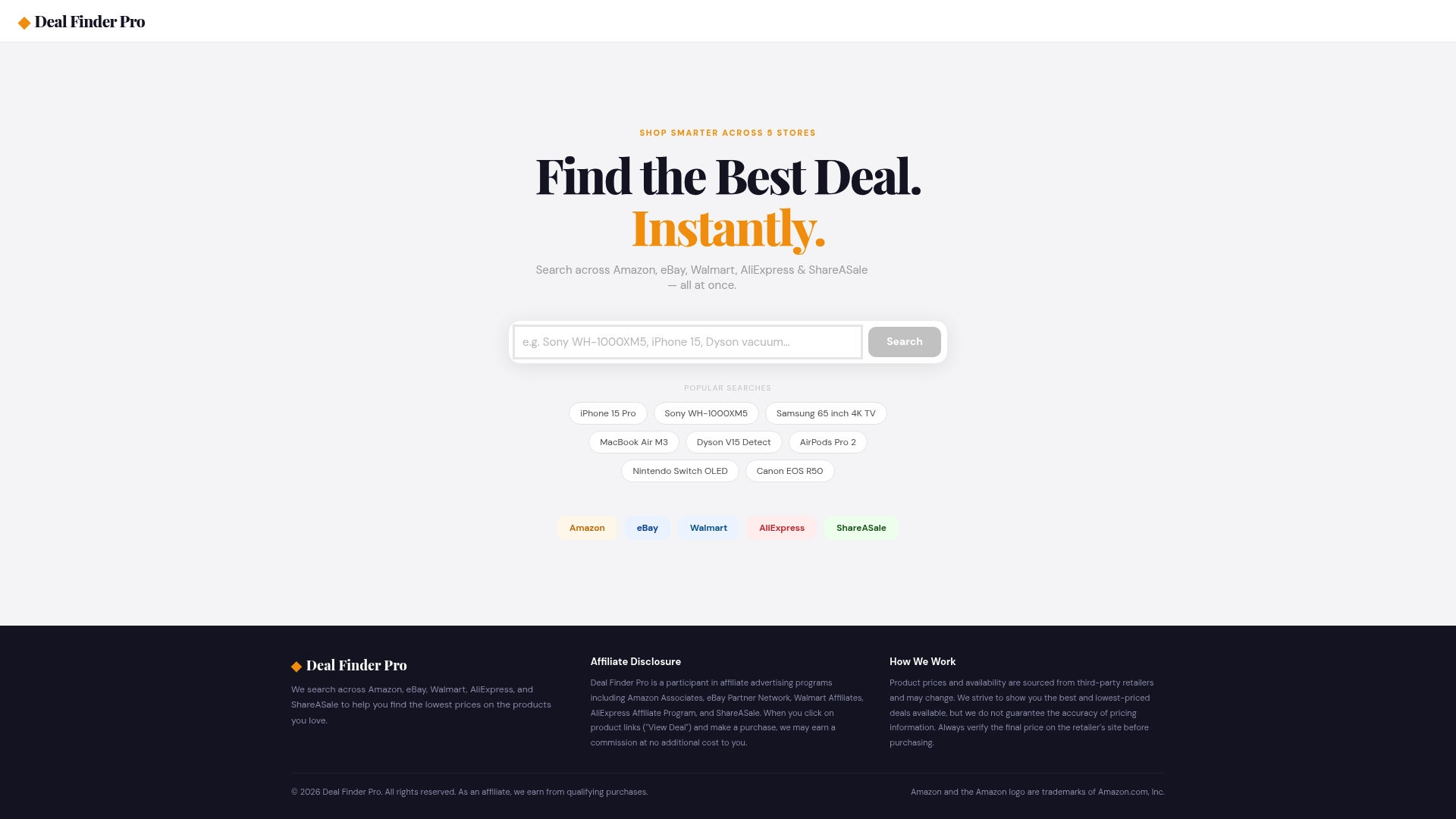
You can search for specific products, filter by deal type, and instantly compare prices across all major platforms. Whether you are hunting for a bundle on a new laptop, a clearance TV, or a flash sale on wireless earbuds, Deal Finder Pro puts the total value picture in front of you immediately. Stop chasing sticker prices and start finding deals that actually deliver.
Frequently asked questions
What is the difference between a flash sale and a clearance deal?
A flash sale is a temporary, high-discount event lasting hours or days, while a clearance deal targets discontinued or end-of-season inventory with deeper discounts but limited selection and sometimes reduced warranty coverage.
Should I always choose the deal with the biggest discount?
No, because total value including extras and accessory costs often makes a smaller discount the smarter overall choice.
How can I make sure I'm getting a trustworthy electronics deal online?
Use platforms with strong deal navigation and filtering, check full bundle inclusions, confirm warranty terms, and always read the return policy before purchasing.
Why do bundles often offer better value than single-item deals?
Bundles include accessories or service trials at a lower combined cost than buying each item separately, making them especially valuable when entering a new product ecosystem like a smartphone platform or gaming console.